


Open 7 days a week!





Fixing Minor AC Problems Before They Become Bigger Problems
Fixing Minor AC Problems Highlights
- Grid Demand Preparedness: We address the elevated outage risks identified by the NERC for Georgia, helping your system withstand the massive “simultaneous start” surges and localized brownouts common during Atlanta’s first 90-degree heat wave.
- Neighborhood-Specific Solutions: From managing moisture levels caused by red clay soil in Grant Park and Decatur to optimizing historic ductwork in Virginia-Highland and Inman Park, we tailor our repairs to your home’s specific architectural and environmental challenges.
- Strategic Preventative Maintenance: Our inspections target the specific points of failure—like startup capacitors and copper line thermal expansion—that cause systems to crash when Georgia Power’s load growth peaks.
- Refrigerant & Rebate Guidance: We help you navigate the rising costs of R-410A while maximizing Georgia Power’s rebate programs for smart thermostats, ensuring your system remains efficient and cost-effective as utility rates fluctuate.
- Metro-Wide Rapid Response: Whether you are in Buckhead, Alpharetta, or Marietta, our background-checked technicians provide 24/7 service with no after-hour fees to catch minor airflow issues before they become “big ticket” replacements.
Table of Contents
- Why Do Most AC Systems Fail During the First Heat Wave?
- What Happens When Everyone in Atlanta Turns On Their AC at Once?
- How Small AC Problems Turn Into “Big Ticket” Repairs
- What Are the “Early Warning Signs” You Shouldn’t Ignore?
- Frequently Asked Questions
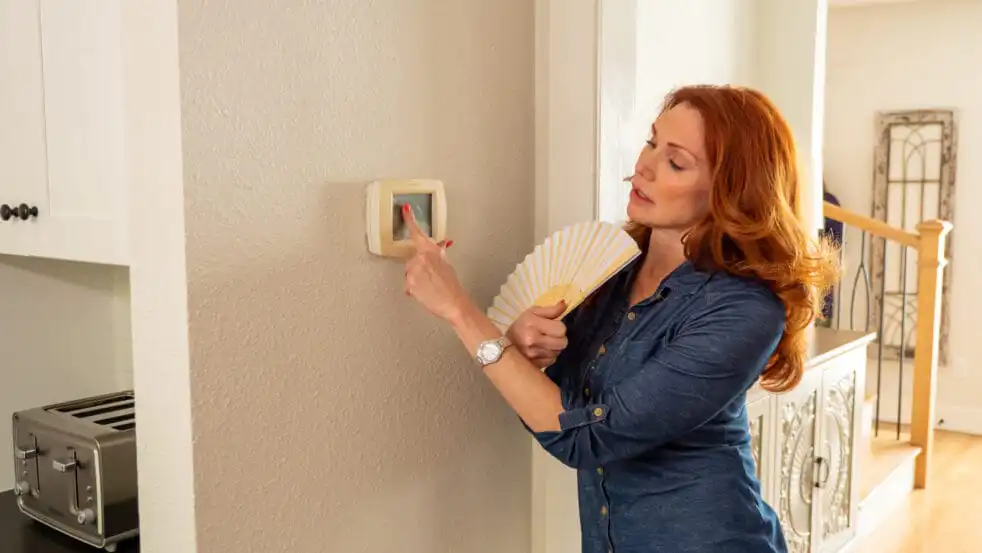
Atlanta’s spring can feel deceptively comfortable, with mild mornings and breezy afternoons. Unfortunately, these pleasant conditions often give way to extreme heat and humidity sooner rather than later. Worse still, this calm period often leads homeowners to delay addressing AC problems that can turn into full-blown disasters later in the season.
In many cases, the problem begins in the winter, when systems sit idle, and dust collects on critical components, while small leaks and worn parts go unnoticed. Once temperatures climb into the 90s and humidity is high, those hidden issues surface quickly.
Now is the time to take action. Call Cool Air at (770) 341-1243 or schedule an inspection or repair online to avoid a costly breakdown!
Is Your Atlanta Home Ready for the First Real Heat Wave?
Before the first true heat wave hits, ask yourself whether your system can handle sustained demand. Many homeowners assume everything is fine and fail to consider the following:
- Hidden wear and tear build up during inactivity: Systems that haven’t been tested under load are the most vulnerable.
- Grid demand spikes affect performance: High usage across the city can impact your system’s efficiency and stability.
- Minor issues escalate under pressure: What seems small in spring often becomes expensive in summer.
- Early preparation reduces risk: Addressing concerns now avoids emergency repairs later.
Taking a proactive approach now gives you more control over comfort, cost, and system lifespan. You should also be aware that national grid assessments from the North American Electric Reliability Corporation have identified Georgia as facing elevated outage risks due to extreme heat and rising demand. Furthermore, the readiness window has shifted into April and May, making early inspection more critical than ever.
At the same time, Georgia Power is managing rapid load growth, including tens of thousands of megawatts committed to large-scale users. When homeowners encounter AC problems at home during the first heat wave, the strain is compounded by thousands of systems activating simultaneously, increasing the likelihood of localized brownouts and energy cost spikes.
Why Do Most AC Systems Fail During the First Heat Wave?
The sudden shift from minimal use to continuous operation causes rapid thermal expansion in copper lines and places intense electrical demand on aging components. This is why most AC systems fail during the first heat wave, especially when internal wear has gone unchecked.
Refrigerant levels can also decline slowly due to micro-leaks while the system is inactive. Once cooling demand spikes, the system struggles to perform efficiently, often leading to immediate failure. A common issue is startup capacitor failure, where the unit lacks the electrical boost needed to start high-amperage motors under extreme heat.
In older neighborhoods like Buckhead, Grant Park, and Decatur, the region’s red clay soil retains moisture around foundations. That moisture raises indoor humidity levels, increasing the load on HVAC systems, and causing common AC problems that appear during peak demand periods.
Historic homes in areas like Virginia-Highland or Inman Park often lack modern ductwork and moisture control systems. In these environments, even minor leaks can escalate quickly, illustrating how small AC problems turn into big repairs, especially when combined with poor ventilation and high humidity.
What Happens When Everyone in Atlanta Turns On Their AC at Once?
What happens when everyone turns on their AC at the same time? During the first 90-degree afternoon, a massive surge of current flows across the metro grid as systems activate simultaneously. When demand spikes, it can strain both infrastructure and individual systems.
Voltage drops, commonly known as brownouts, can damage sensitive HVAC electronics without proper surge protection. These fluctuations are particularly risky for modern systems that rely on advanced control boards and sensors.
At peak outdoor temperatures, condensing units operate at maximum capacity. When thousands of units run simultaneously, utilities may initiate load shedding to stabilize the grid, directly impacting performance and making reliable AC services even more crucial during high-demand periods.
How Small AC Problems Turn Into “Big Ticket” Repairs
A simple clogged filter restricts airflow, often leading to frozen evaporator coils. Over time, this forces the compressor to work harder until it fails entirely, turning what would have been a minor maintenance issue into a major AC repair requirement.
Low refrigerant levels cause compressors to overheat, drastically reducing their lifespan. Without proper refrigerant leak detection, this issue goes unnoticed until system failure.
Clogged drain lines, often caused by algae buildup, can lead to water overflow and structural damage. In many cases, homeowners only discover the issue after ceiling or attic damage has already occurred, by which time full air conditioning replacement is necessary.
What Are the “Early Warning Signs” You Shouldn’t Ignore?
Recognizing early warning signs gives you a chance to act before system failure. These indicators often appear subtle at first but become more pronounced under heat stress:
- Unusual noises: Squealing can indicate belt issues, while grinding points to worn motor bearings.
- Short cycling: Frequent on-and-off cycles, known as short cycling, often signal overheated components or thermostat calibration issues.
- Rising humidity: If your home feels sticky despite cooling, frozen evaporator coils may be limiting moisture removal.
These warning signs are early indicators of deeper mechanical or airflow issues. Addressing them promptly through preventive maintenance can prevent larger system failures.
Frequently Asked Questions
Why is my AC running but not cooling?
This typically points to airflow restrictions, low refrigerant levels, or compressor issues. Problems such as frozen evaporator coils or dirty filters can also significantly reduce cooling capacity.
Can a power surge really kill my AC?
Yes, voltage spikes can damage sensitive electronic components inside your system. Installing surge protection is a practical safeguard against grid instability.
Why is my energy bill so high even though it’s only 80 degrees out?
Even moderate temperatures can trigger higher energy use if your system is inefficient or struggling with hidden issues. Georgia Power’s peak rates and increased demand can also amplify costs during early heat events.
Protect Your Home with Expert AC Services. Call Cool Air Today
Atlanta homeowners in Atlanta, Marietta, Decatur, Alpharetta, and Kennesaw are facing greater pressure on their HVAC systems than ever before, driven by rising temperatures and increasing grid demand. Addressing issues early with professional AC services helps maintain system performance and avoid disruptions during peak heat.
The transition to new refrigerants is accelerating. Repairs involving older systems using R-410A are becoming more expensive due to limited availability. At the same time, Georgia Power’s rebate program offers incentives for smart thermostat upgrades, helping homeowners better manage energy use and system performance through proactive monitoring.
Take control before minor issues escalate. Schedule service online or contact us at (770) 341-1243 for 24/7 service with no after-hour fees. Make sure to check our promotions page as well and ask about our flexible financing options!