


Open 7 days a week!







How to Choose the Right Generator for Your Atlanta Home?
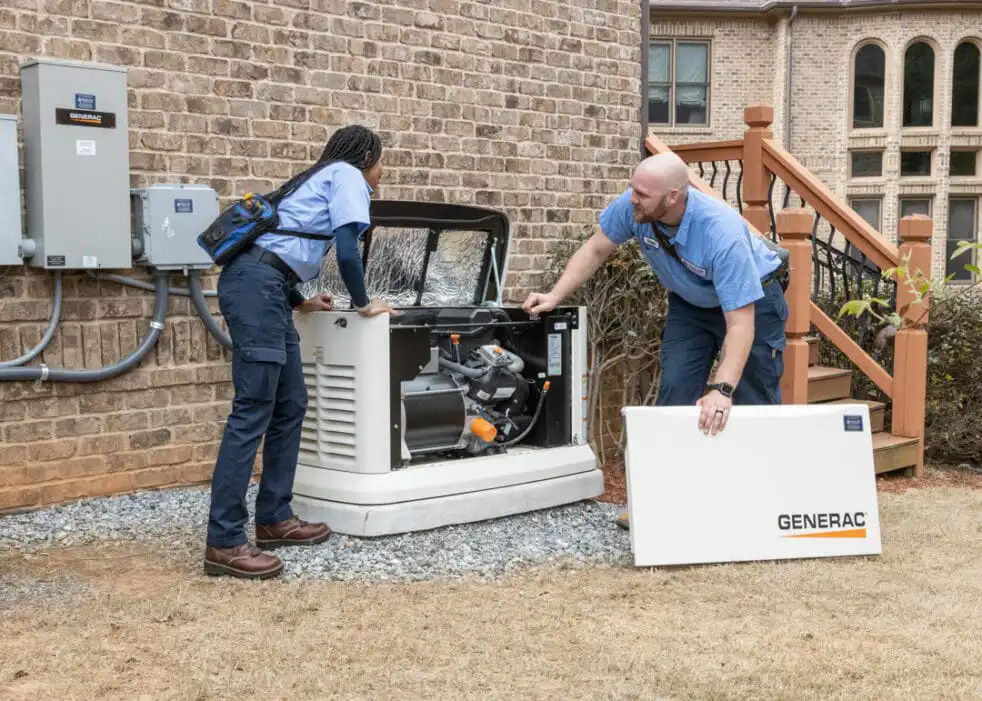
Choosing a Generator Key Takeaways
- Standby generators provide automatic, safe, whole-home protection during Atlanta’s frequent outages
- Proper sizing is critical to keep HVAC systems running and control indoor humidity
- Professional, code-compliant installation protects your home, safety, and long-term investment
Table of Contents
- Standby vs. Portable: The Safety and Convenience Gap
- Sizing Your Generator: Calculating Your Home’s Power Needs
- Fuel Options: Natural Gas vs. Propane for Metro Atlanta
- The Cool Air Advantage: Code-Compliant Turnkey Installation
- Frequently Asked Questions (FAQ)
Atlanta homeowners often experience regular disruptions from summer storms, dense tree coverage, and grid strain across the region. Unfortunately, outages aren’t rare events in the area. They’re part of living in a heavily wooded, high-humidity environment where power reliability can shift quickly during peak weather. Learning how to choose a generator is therefore crucial for dealing with these outages.
Indoor air quality—not inconvenience—is the best argument for standby generator installation. Atlanta’s humidity rises rapidly when HVAC systems shut down. Homes can feel damp, stagnant, and uncomfortable within hours. A standby generator acts as a humidity defense system, keeping air conditioning running so your home remains breathable, dry, and protected from moisture-related damage.
The Metro Atlanta grid blends urban infrastructure with sprawling suburban distribution lines running through dense tree canopies. Across Fulton and Cobb Counties, localized outages caused by falling limbs are common, even when the broader Georgia Power grid remains stable. These “micro-outages” often last between 12 and 48 hours.
That’s why you should think of generators as lifestyle reliability tools rather than “emergency-only” equipment. With a Generac generator, Atlanta homes remain functional, Wi-Fi stays active, and your daily routine continues uninterrupted. They free you from the worry of spoiled groceries or lost connectivity during workdays, giving you valuable continuity.
Location also affects your need for a generator. Homes inside the perimeter typically rely on municipal water systems, but many properties in expanding suburban zones depend on private well pumps. Without power, water access stops completely, turning a routine outage into a serious sanitation issue.
Did you know? If your home uses a well pump, a generator becomes a core utility rather than a backup feature. No electricity means no running water, no flushing toilets, and no showers. When learning how to choose a generator for your home, consider water access as well.
If you want expert guidance tailored to your property, book online or call Cool Air Mechanical at (770) 341-1243 to discuss the right system for your home. A Generac-authorized dealer with an A+ BBB rating, Cool Air Mechanical offers generator services that can ensure your home’s functionality and comfort during power outages.
Standby vs. Portable: The Safety and Convenience Gap
Many homeowners initially opt for portable generators, but they have limitations that make them less practical for Atlanta conditions. They require manual setup, fuel storage, and outdoor operation, often in the middle of a storm. They also pose a risk of carbon monoxide if used improperly.
In contrast, standby systems are permanently installed and activate automatically via an automatic transfer switch (ATS) during an outage. There is no need to step outside in heavy rain or high winds. These units are safety-compliant, integrated into your electrical system, and can even contribute to insurance benefits thanks to their reliability and reduced risk.
Sizing Your Generator: Calculating Your Home’s Power Needs
Choosing the correct size is one of the most technical parts of the process. A detailed home generator sizing guide helps determine the capacity your home requires based on electrical demand and appliance loads.
- 7–15 kW systems typically handle essentials like refrigeration, lighting, and security systems
- 15–22 kW or higher systems provide whole-home backup, including central air conditioning
The difference comes down to whether you want basic functionality or full comfort. In Atlanta’s climate, whole-home backup is often the preferred option because maintaining indoor cooling is critical.
Accurate sizing requires evaluating the starting vs. running watts of major appliances and conducting a professional load calculation. This step prevents system overload and guarantees performance during peak demand.
Fuel Options: Natural Gas vs. Propane for Metro Atlanta
Natural gas is the most common option for homes connected to a municipal supply. It provides a continuous fuel supply via a dedicated natural gas line, eliminating the need to refuel during extended outages.
Propane offers flexibility for homes without gas access. It burns cleanly and can be stored on-site, making it a strong alternative for rural or suburban properties with limited utility connections.
Cool Air Mechanical handles fuel integration as part of a complete installation, coordinating both electrical and gas components to deliver a seamless, fully operational system from day one.
The Cool Air Advantage: Code-Compliant Turnkey Installation
A generator installation involves far more than equipment placement. It requires compliance with the 2026 local electrical code, permitting across Metro Atlanta jurisdictions, and integration with your existing electric services. Every system is installed with NATE-certified precision and built to meet strict safety standards.
In neighborhoods like Inman Park, Virginia-Highland, and Grant Park, space constraints and HOA regulations further complicate installation. Residential communities are usually subject to noise-level or visual-impact restrictions.
That is where thoughtful design matters. Cool Air Mechanical’s technicians strategically position units, using landscaping, sound-dampening solutions, and layout planning to maintain aesthetics without compromising performance. The result is reliable power without disrupting your home’s appearance or neighborhood harmony.
Frequently Asked Questions
Will a generator increase my Atlanta home’s property value?
Yes, standby systems are considered a premium upgrade. They add resale appeal by offering reliability, especially in areas prone to outages.
Can a generator power my central air conditioner during a heatwave?
Yes, if properly sized. Whole-home systems are designed to handle HVAC loads, which is critical for managing indoor humidity and comfort.
Do you handle the electrical and gas permits required by the City of Atlanta?
Yes, all permitting and inspections are included in the turnkey installation process to meet local compliance standards.
How quiet are modern Generac standby generators?
Modern units are engineered for low noise output and can be installed with additional sound control measures to minimize disturbance.
Are You Looking For Generator Services for Your Home?
Choosing the right system comes down to understanding your home’s needs, your location, and your comfort expectations during an outage. From sizing and fuel selection to installation and long-term preventive maintenance, every step contributes to system performance and reliability.
If you are evaluating how to choose a home generator, working with a trusted local provider makes the process much more convenient and straightforward. We invite you to book online or contact us at (770) 341-1243 to explore your options. You can also ask about our flexible financing options and current specials that can make our professional generator services even more accessible and affordable.